
Building in Bushfire-Prone Areas: BAL Ratings Explained
Architect Chris Freeburn shares the most up-to-date information on building and renovating for bushfire resilience.
Australia, and other places around the world, are seeing more frequent and devastating bushfires¹. The recent fires in California showed how quickly house fires, caused initially by bushfire, can spread and overwhelm the emergency services. Australia’s climate and vegetation make bushfires an intrinsic part of the landscape, and the predominant eucalyptus forests have evolved to thrive with fire. One likely possible reason for the increase of catastrophic fires in Australia is the end of indigenous fire management after Europeans arrived². This change has caused a build-up of burnable material, known as “fuel load”.
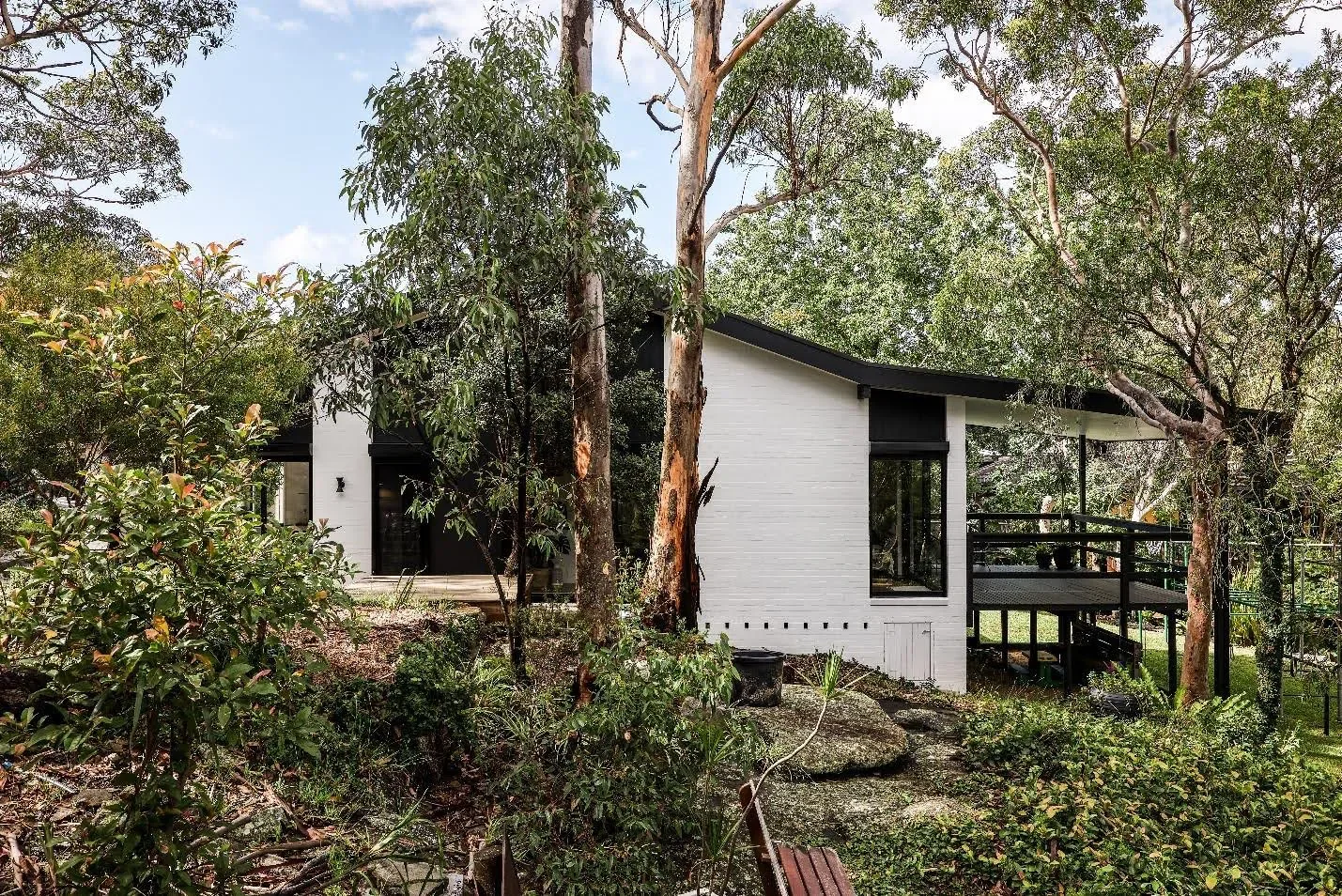
Pettit+Sevitt MKii by Ironbark Architecture. This renovation upgraded an existing 1960’s home to a combination of BAL-40 and BAL-FZ standards. Image credit: Andy Macpherson.
Bushfires in Australia are such an inescapable reality that we now casually refer to the annual period of high-risk conditions as “bushfire season”.
In an effort to provide a measure of protection for the occupants of buildings whilst a fire front passes (as well as providing a measure of protection to the building itself) new homes and renovations in Australia must comply with a series of construction requirements that are prescribed by the document AS 3959:2018 - Construction of Buildings in Bushfire Prone Areas. It is important to note that these construction requirements do not provide a guarantee the building will survive a bushfire attack on every occasion.
The construction requirements for a new home or renovation in a bushfire prone area differ depending on the determined BAL (Bushfire Attack Level) rating. There are numerous methods of construction and materials that can be used to comply with the requirements, and below are some simple explanations and guidelines to help make some early decisions in the design process that can minimise the complexity and costs of building in bush fire prone areas (keep in mind that that different states / territories can have variations to the AS3959 requirements that are specific to their State / Territory). For more in depth information on the types of construction and materials available for use in bushfire prone areas refer to the Green Rebuild Toolkit, employ a bushfire consultant to determine the applicable BAL rating to your land, and engage with an architect or designer who has experience at building in bushfire prone areas.
Understanding BAL ratings
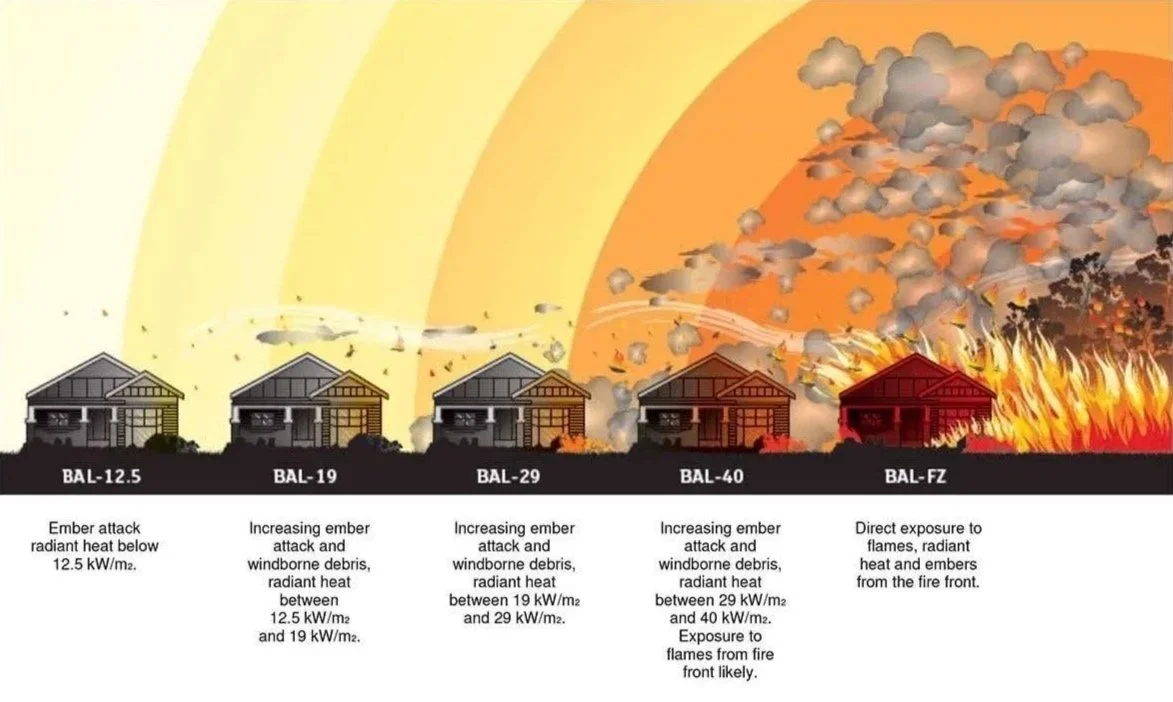
Bushfire Attack Level (BAL) ratings refer to the fire intensity your house is likely to be subjected to in a bushfire, expressed in terms of radiant heat. Image: Victorian Country Fire Authority
A BAL rating is the determined Bushfire Attack Level for your property – think of it as an estimated risk assessment. The BAL ratings begin with BAL-12.5, followed by BAL-19, BAL- 29, BAL-40 and finally BAL-FZ (Flame Zone). The numbers refer to the predicted exposure to radiant heat (in kilowatts per square metre) that may be experienced by the building; BAL-29 construction anticipates an exposure to 29kW/m² (for comparison the average radiant heat from the sun at midday on a summer’s day is about 1kW/m² and the pain threshold for most people is about 2kW/m² and at this rate bare skin will undergo a 2nd degree burn in about 40 seconds).
There are two methods that a bush fire consultant can use to determine the applicable BAL, but the most common and straight forward looks at a combination of;
the distance between the house and the relevant vegetation (it’s not always the closest tree that the measurement is taken to)
the type of vegetation (rainforest is lower risk than a eucalypt forest)
the slope under the vegetation (a downhill slope away from the property is higher risk than an uphill slope).
Once the BAL rating has been determined, it will inform you of the construction requirements that you will be required to adhere to. In some instances the side of the home furthest from the vegetation may be permitted a lower BAL than the rest of the home.
One of the first things you should do when undertaking a bushfire prone project is to have the BAL ratings mapped by a bushfire consultant. The difference of being able to build to the BAL- 29 requirements rather than BAL-40 may be as simple as locating your building a few metres further away from the boundary facing the bushfire threat.
BAL-12.5 to BAL-29: Cost-Effective Steps Toward Bushfire Resilience
The construction requirements of BAL 12.5 to BAL-29 are relatively straightforward for an experienced designer to navigate and don’t present any show stopping additional costs for the owners. The requirements focus primarily on protection against ember attack which is the most common cause of house fires during a bushfire³. In all BAL’s you need to seal all gaps, joints and weepholes in the building – this can usually be achieved with metal mesh that has an aperture of less than 2mm.
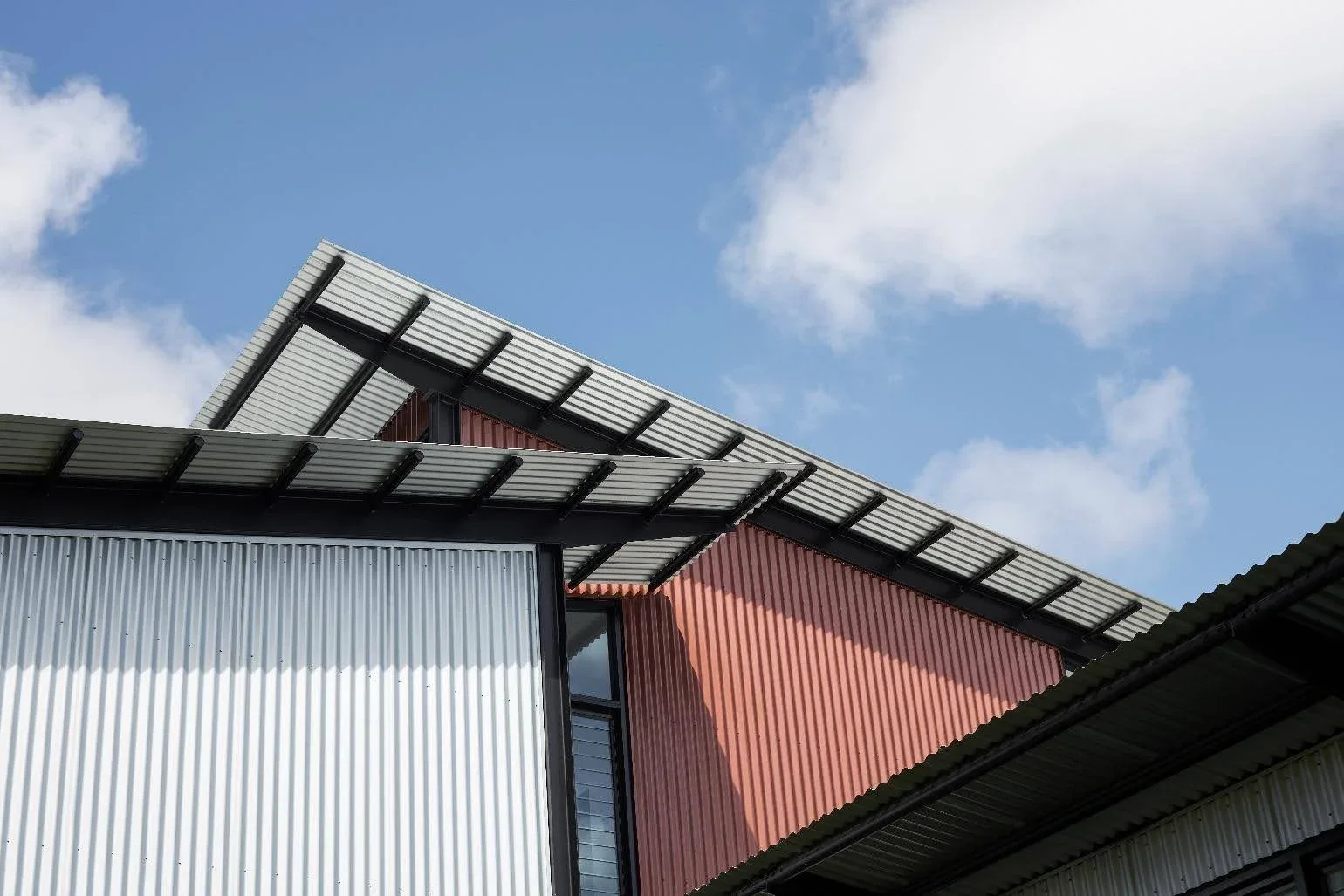
Tin Shed House by Ironbark Architecture. Corrugated steel is a popular material for construction in bushfire prone areas. This project uses a combination of Zincalume and Colorbond Metallic. Image credit: Andy Macpherson.
One of the first considerations when building from BAL-12.5 up to BAL-29 is what type of foundation/floor the building will have. If your building is on posts or above the ground there are no bushfire construction requirements so long as the underside of the floor/framing structure is more than 40cm above the ground, or if the subfloor area is enclosed by walls or metal mesh. In BAL-29 any foundation posts need to be bushfire resisting timber species (a select list of hardwood species), steel or brick. If your home has a concrete slab on the ground there are no requirements for the slab but your wall cladding may be subject to the following requirements.
In BAL-12.5 and BAL-19 any cladding on your walls that is less than 40cm from a horizontal surface (this might be the ground if you have a slab on ground, but it also applies to any cladding with a deck below or a roof that has a slope of less than 18 degrees) needs to be brick, fibre cement, metal or a bushfire resisting timber species. In BAL-29 this requirement applies to all the external cladding, not just the lowest 40cm.
BAL-40: Where Tougher Standards Begin
The three most apparent impacts of BAL-40 will be on the use of timber, the type of decking you can use and the cost of your windows. Timber cannot be used externally on a BAL-40 building with the exception of balustrades that have a gap between the building envelope and the balustrade. In addition to not being able to use timber, decking on BAL-40 buildings (and FZ) cannot have any gaps between boards. There are products such as HardieDeck which is made from fibre cement and has aluminium trims between each board to maintain the timber deck look whilst addressing these requirements, but a tiled or paved surface for outdoor areas (which have no bushfire construction requirements) may be more suitable.
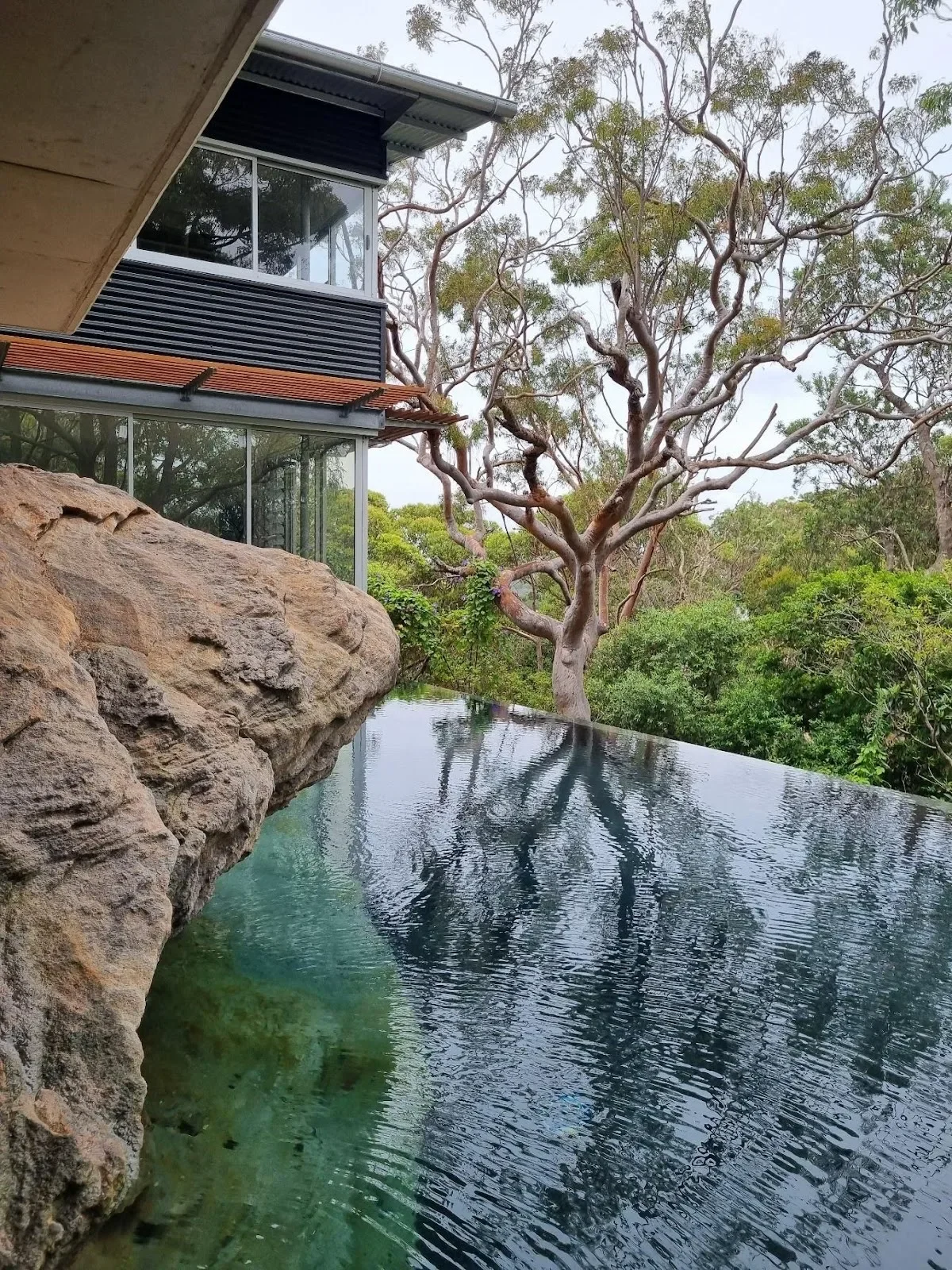
Alcheringa by Ironbark Architecture. This new home was built to the BAL-40 standard. Decisions made early in the design process ensured that construction costs did not escalate out of control. The swimming pool has a Storz fitting allowing for a pump to be easily connected for firefighting purposes. Image credit: Ironbark Architecture.
Windows will either need to be “BAL-40 certified” or they will need to meet a number of required standards. One of the advantages of tested / certified windows is that you may only need bushfire mesh on the openable portions of the window rather than over all the window; this requirement protects the building from embers even if the glass breaks, whereas certified windows are held to a higher standard of resistance. Australian window and door manufacturer AWS estimates that BAL-40 windows cost approximately 28% more than standard windows.
AS 3959 doesn’t specify any requirements for subfloor supports where the subfloor is enclosed by a wall such as brick or blockwork, but if the subfloor is not enclosed supports in BAL-40 will need to be non-combustible (ie. steel or brick) and the floor system too (bearers, joists and flooring) will need to be non-combustible or protected by a non-combustible covering. The simplest approach is to decide early in the design process to have either slab on ground construction or to enclose the subfloor area with a masonry (bricks, blocks, etc.) wall.
Because combustible materials cannot be used externally in BAL-40 construction the external walls of your home will need to be masonry or for framed construction (you can still use timber for the building frame) clad with fibre cement (9mm or thicker) or steel cladding (such as Colorbond). If you are cladding over a frame you should always consider how the wall deals with condensation issues, typically by having a drainage cavity between the cladding and the wall frame. The gaps at the top and bottom of a drainage cavity need to be sealed with a metal mesh so that embers cannot get into the cavity.
Both tiled and metal roofs are permitted for BAL 40 construction, however metal roofs will leave less gaps than tiles. Any penetrations through the roof (vents, skylights, supports for solar panels, etc.) need to be BAL-40 compliant and sealed where they penetrate with a non-combustible material.
Contrary to popular belief AS3959 does not requirement the installation of gutter guard in bushfire prone areas (unless specified under local requirements) however if you do install them, they must be made from a non-combustible material. Gutter guard doesn’t eliminate gutter maintenance, it just changes the nature of it. Gutters without gutter guard are more easily cleared with a brush or hose (use external brackets only on your gutters to facilitate cleaning) but will require more regular maintenance. Gutters with gutter guard will keep larger leaf litter out, but smaller debris and pollen will still build up over time and will require a more intensive cleaning process such as a pressure washer (as the mesh will reduce your access into the gutter).
BAL-FZ: The Highest Level of Bushfire Construction Standards
The step up in construction requirements is most significant from BAL-40 to BAL-FZ. As the name suggests “Flame Zone” anticipates that your home may be directly exposed to theflames of a fire front and is the most extreme rating that can be applied. Despite the significant extra costs required to build to the BAL-FZ standard it is important to understand that these construction requirements will not make the house ‘bushfire proof’. The building may provide temporary shelter while a fire front passes, but this does not mean the building will survive the fire. The temperature of the flames of a fire front can range from 600°C up to 1100°C, yet aluminium window frames can melt at temperatures around 660°C and Colorbond Steel should not be heated above 200°C. Structural steel may distort and getting certification from an engineer that exposure to fire has not compromised the structural integrity of masonry or concrete building elements may prove difficult. So whilst a building might “survive” a bushfire it could still require extensive repairs afterward.
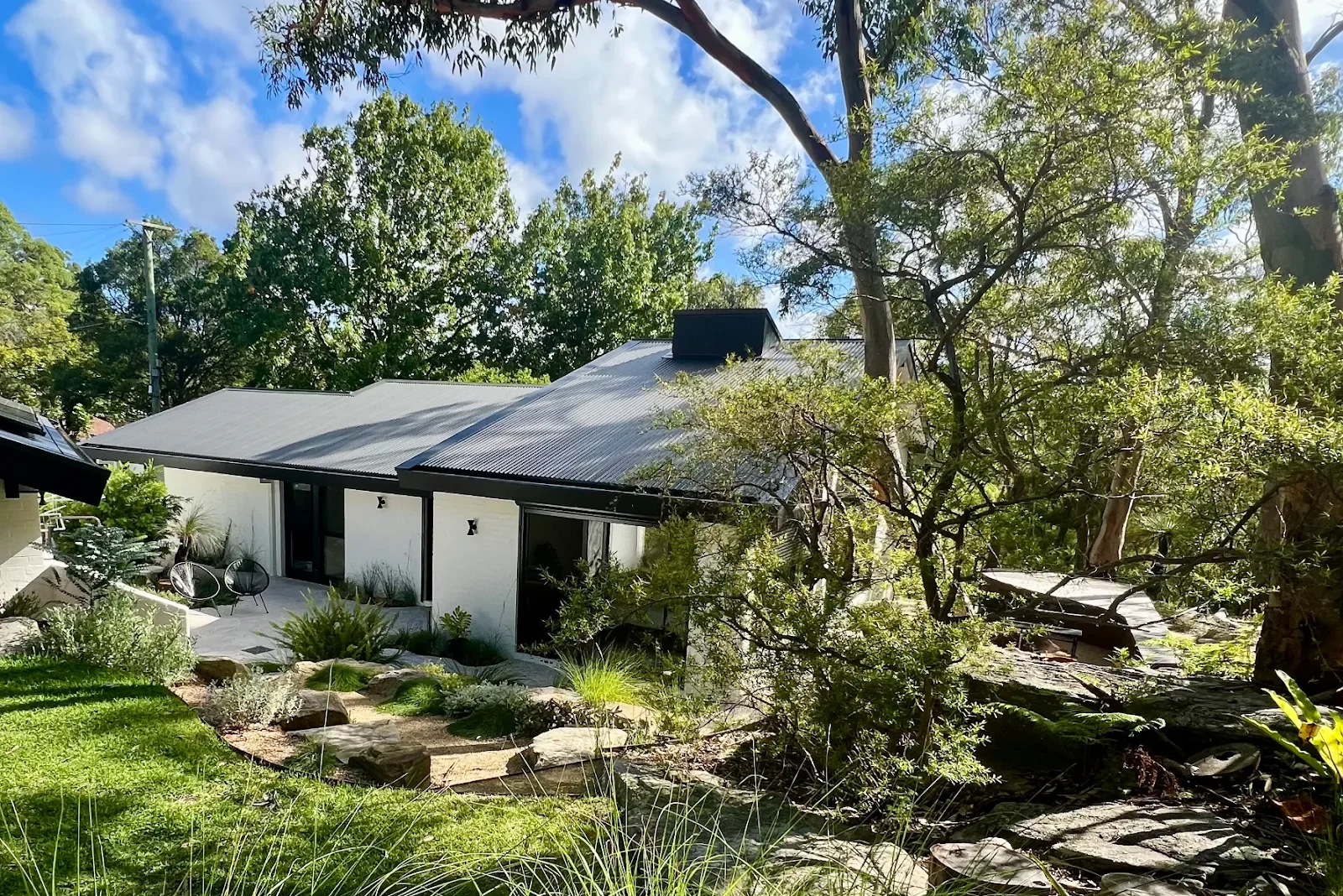
Pettit+Sevitt MKii by Ironbark Architecture. This renovation upgraded an existing 1960’s home to a combination of BAL-40 and BAL-FZ standards. Image credit: owner
The two biggest cost items for BAL-FZ homes are the shutters and the roof system. Whilst there are BAL-FZ rated window and door products on the market they are still prohibitively expensive and typically use an intumescent layer which hardens in extreme heat to form a barrier against flames and once fire activates this layer, the windows are no longer functional. Bushfire shutters are a more practical approach, however they can still be very expensive, especially if your home has been designed with expansive areas of glass. Some key strategies for the design of windows and doors for a BAL-FZ home is to keep their size modest and to avoid any unconventional shaped windows (round or sloped to follow the line of the ceiling) as it will likely not be possible to install shutters on these types of windows. The silver lining to the added expense of flame zone shutters is that there are no requirements for the windows behind them (except best practice would still include bushfire mesh screens to the openable portions of the window). Shutters or windows used for BAL-FZ construction must be tested to the rigorous requirements of AS1530.8.2, you cannot use just any window or shutter product marketed for bushfire protection.
The roof system is the next high-cost item of a BAL-FZ build due to the requirement for an additional layer of protection below the roof sheets (along with a series of other specific construction detail requirements). This additional layer can be 15mm sheet of tongue and groove plywood, or there are proprietary products that have been certified for use (such as Trafalgar BoardeX or TBA Firefly). Because of this additional layer, a roof with a less complex shape (such as a single pitch skillion roof rather than a hip/gabled roof with numerous valleys) will not only be more cost effective but will also provide less places where leaf litter might build up. Eaves also add a layer of cost due to the extra protection they require; designing an eaveless roof that relies on the shutters or bolt-on shade awnings to manage sun control can be an effective way to reduce the cost of the roof. There are also requirements for more fixings to hold the roof down against the wind uplift forces that bushfires can create. Whilst not strictly prohibited, box gutters are best avoided in all bushfire prone areas.
Masonry, concrete or earth construction walls are all straightforward ways for your walls to comply with BAL-FZ requirements but you can still use framed and clad walls, but you’ll need to use a tested or fire rated system such as FireCrunch K-Wall, Hebel PowerPanel or CSR Fyrcheck.
By making some sensible decisions early in the design process (typically characterised by a simple building shape, simple roof and not too much or too large glazing) you can manage the cost implications that BAL-FZ will have on your project.
Final Thoughts
The above is but an incredibly brief overview of just some of the requirements of AS3959 that will be applicable to a new build or renovation project in a bushfire prone area. The decisions that will have the biggest impact on the construction cost will be those decisions made early (size of the house, positioning on the property, orientation, etc.) whist the decisions made later in the design process are likely to have a lesser impact which is why it is crucial to engage experienced professionals at the earliest possible stage.
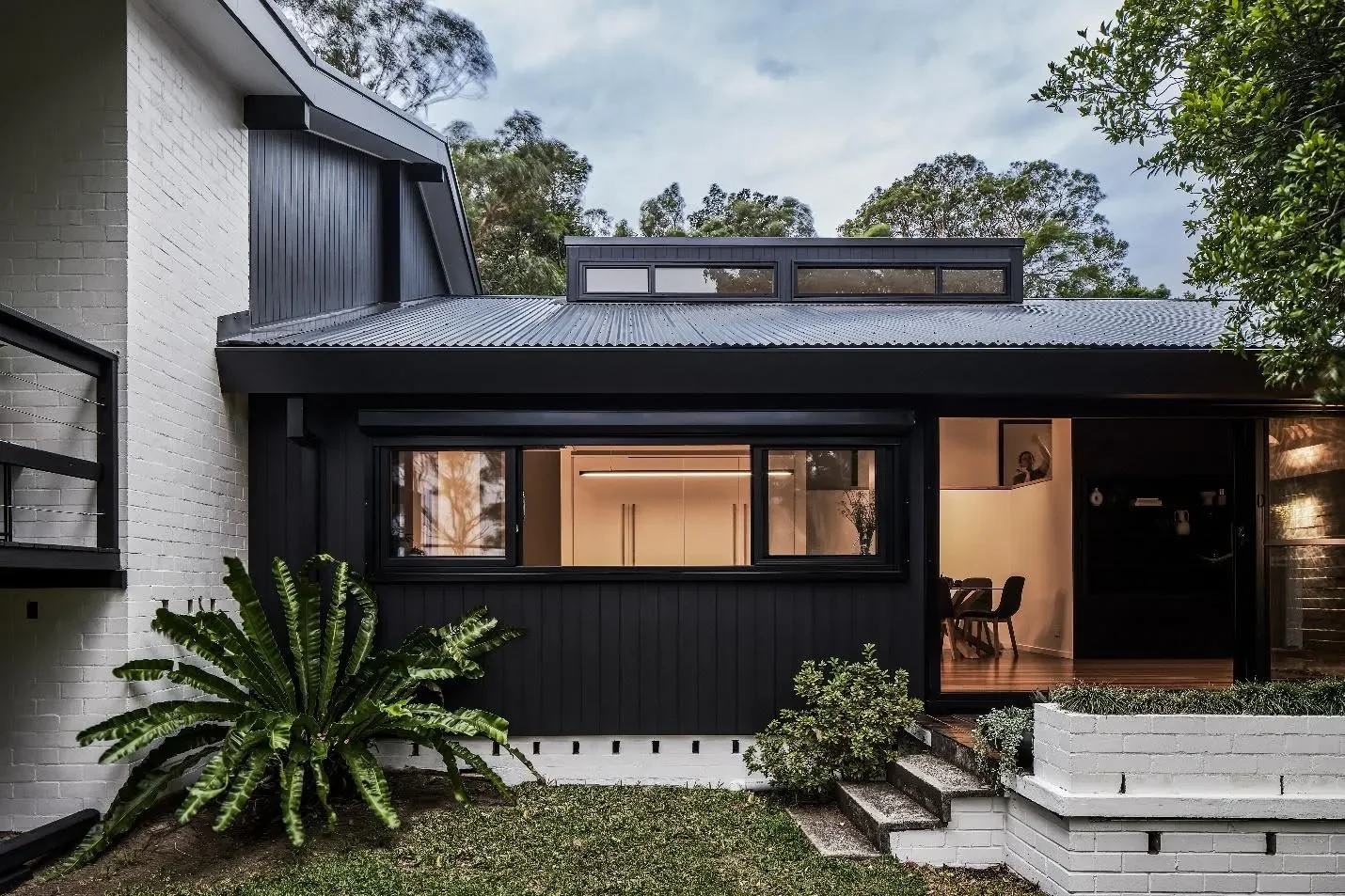
Pettit+Sevitt MKii by Ironbark Architecture. This renovation upgraded an existing 1960’s home to a combination of BAL-40 and BAL-FZ standards. Image credit: Andy Macpherson.
The requirements of the standard are generally only applicable to the new parts of a renovated building, not the existing parts that are to remain. Because a bushfire won’t discriminate, it’s advisable to also make upgrades to the existing parts of the building (especially those related to protection against ember attack), doing so may even provide the opportunity to downgrade the BAL requirement.
Whilst the bushfire construction requirements of AS3959 provide a measure of protection for the occupants of buildings as well as the building itself, there is a multitude of other things you can do to protect yourself and the building in the event of a bushfire. Part of the bushfire construction requirements is the management of the area around your building, known as the Asset Protection Zone (or APZ), however there is no ongoing checks or certification that the APZ continues to be managed as it should; proper management of the APZ, including reducing the fuel load around the building, is essential if you want your home to be able to survive a bushfire. Whilst not part of A53959 construction requirements, sprinklers can aid in the survival of buildings (and people) during a bushfire⁴. Finally, having a bushfire plan (including when to leave) is essential so that in the heat of the moment, no crucial steps are overlooked. A well-built home increases your chances of withstanding a bushfire, but ultimately, survival depends on a combination of design, preparation, and making the right decisions when it counts.
References
1. Cunningham, C.X., Williamson, G.J. & Bowman, D.M.J.S. Increasing frequency and intensity of the most extreme wildfires on Earth. Nat Ecol Evol 8, 1420–1425 (2024).
2. Will Smith, Timothy Neale, Jessica K. Weir, Persuasion without policies: The work of reviving Indigenous peoples’ fire management in southern Australia
Author
Chris Freeburn is the director of Ironbark Architecture, a small architectural practice with an emphasis on connecting with place through buildings that are both evocative and enduring.
Source
Renew Magazine, Issue 171 "Building in Bushfire-prone Areas"