
Polystyrene: convenience at a cost
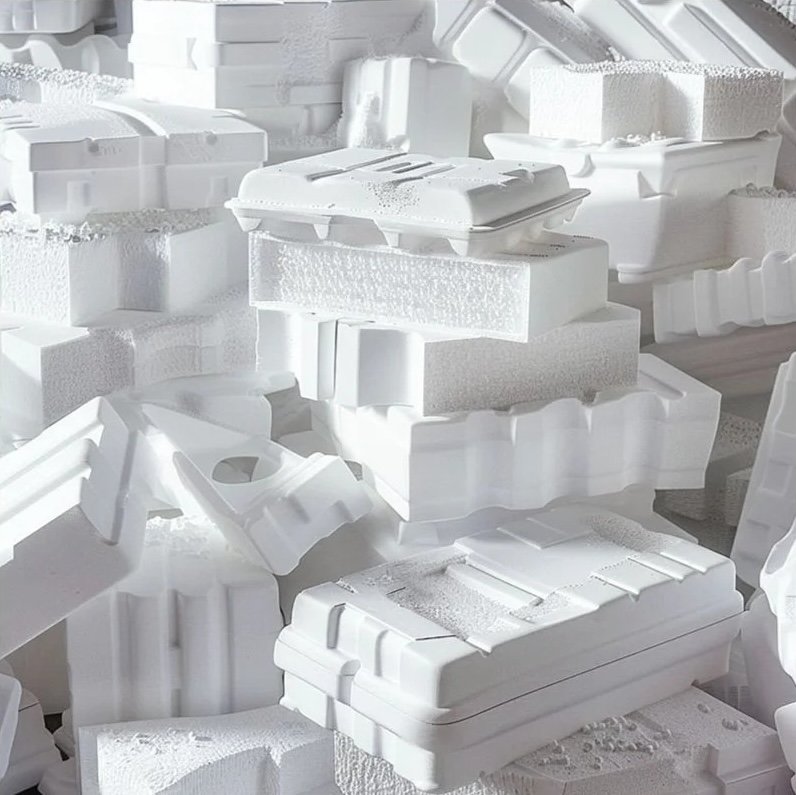
Polystyrene (also known as styrofoam, EPS and XPS) is a building material that often arrives on your site, or sneaks into your building, as a part of something else. It’s used to protect materials in transit. It’s widely used in insulation, both wall and under-slab and in roofing systems.
It’s also often used under concrete slabs as under slab insulation and in some cases to create voids in waffle pod slabs, reducing the amount of concrete required. It can be used as a compressible zone next to beams or footings. And it’s sometimes even used to create architectural mouldings or decorative elements.
The reason it’s chosen for so many different uses and projects is because it’s convenient. It solves immediate problems efficiently and cheaply. It’s lightweight, inexpensive and easy to handle. It also provides thermal performance and reduces structural loads. On site it simplifies logistics, reduces breakages and is quick to install or remove.
In the architectural and building industries, where time, cost and coordination are tightly managed, it offers a level of ease and convenience that many people are tempted by.
The problem is there’s a clear mismatch between the role polystyrene plays in construction and the impact it has beyond it. This is why – as architects – we hate polystyrene.
Why we hate polystyrene as a building material
Source: ABC
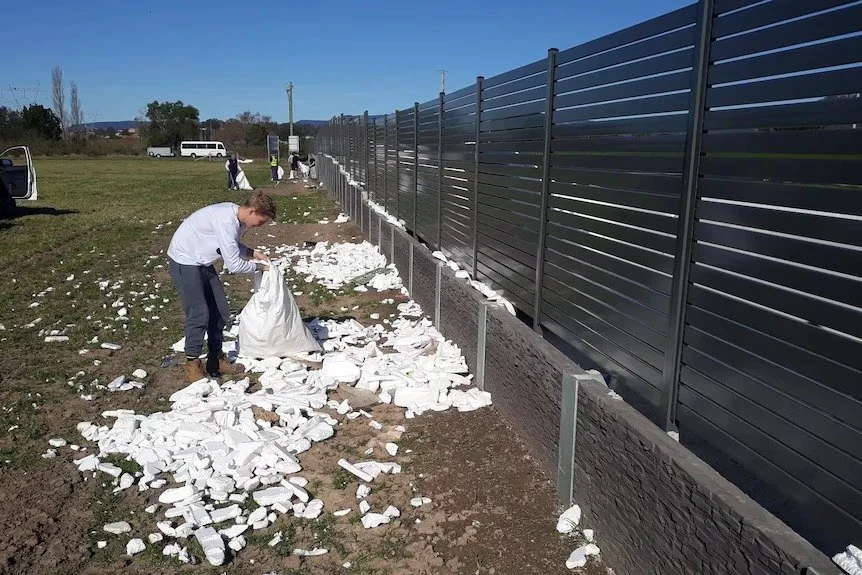
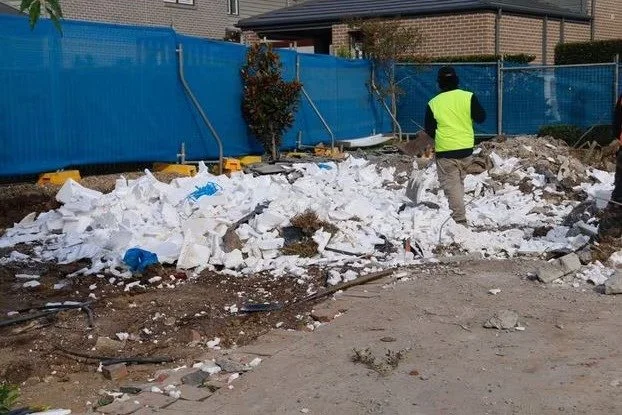
While polystyrene is convenient, the cost of that convenience is very high. The material is fragile, difficult to control and almost impossible to fully recover once it breaks apart. Small beads can shear off very easily, then be dispersed by something as simple as a gust of wind. From there it enters stormwater systems, creeks and bushland, eventually finding its way into the ocean.
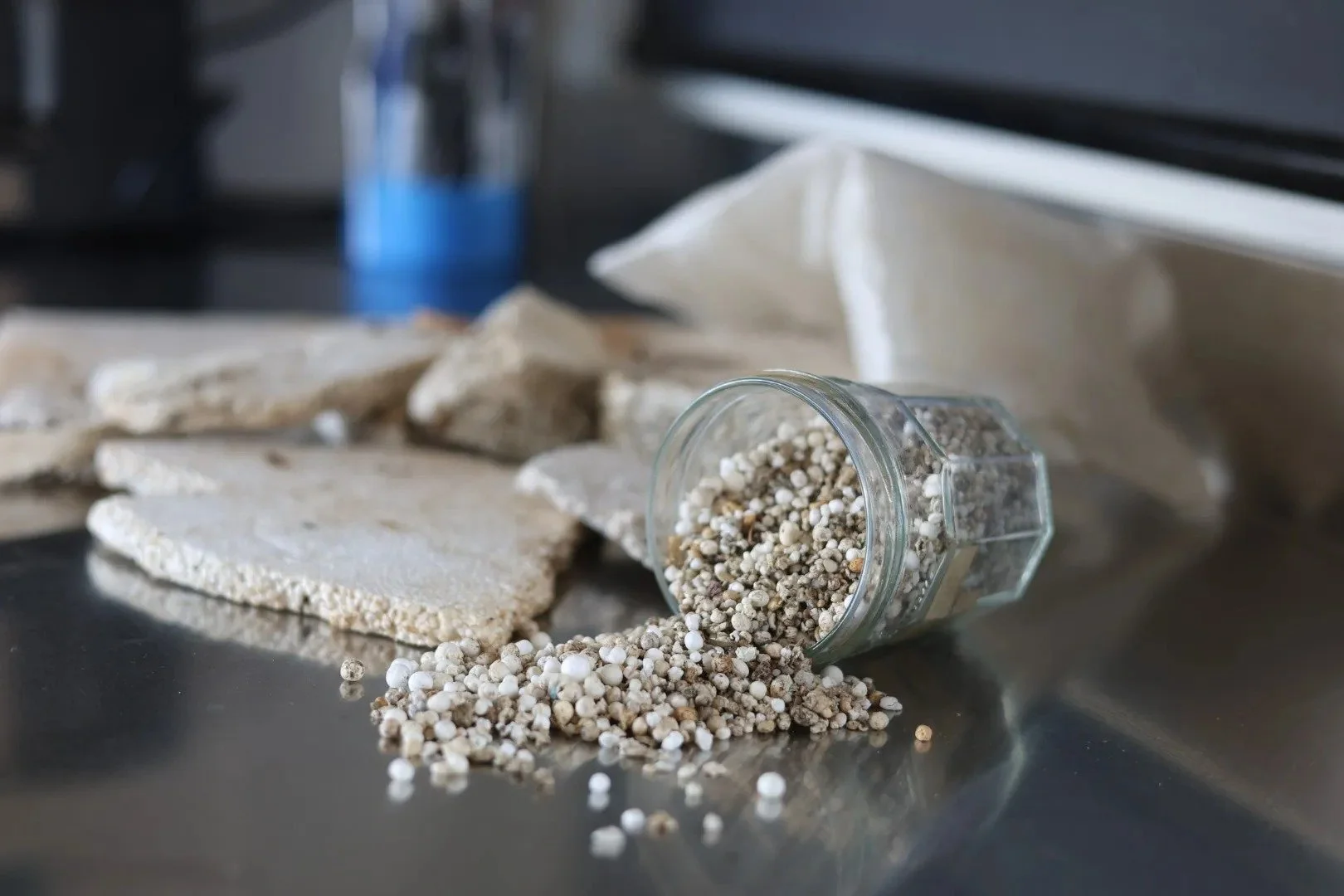
Once it’s in the ocean it fragments into buoyant microplastics that disperse widely and are difficult to recover. In fact, they can last there for generations. Plastic fragments, including polystyrene are now found in hundreds of species, and ingestions rates have doubled over the last decade. It’s a terrible result for these aquatic organisms too and can cause intestinal damage, altered behaviour and reduced feeding and growth.
Before it reaches the ocean, however, it’s already causing damage. Fragments are easily mistaken for food by birds and other wildlife, leading to choking, gut blockage and potential starvation. Once polystyrene microplastics are in the soil they can also persist for decades, alter soil structure and porosity, change microbial communities and ultimately affect the soil’s ability to support growth.
Even production is a problem. Polystyrene is made from styrene, which major health institutions classify as a probable human carcinogen. Production uses and can release into the atmosphere styrene, benzene and ethylbenzene, contributing to hazardous air pollution around manufacturing sites. Historical EPA data list polystyrene manufacturing among the largest industrial sources of hazardous waste, and its production and disposal generate numerous chemical by-products that contaminate air and water.
Source: ABC
What makes this more frustrating is that polystyrene is technically recyclable, and it’s often ‘sold’ to homeowners because of that, marketed as a sustainable building product. Clients believe they are doing something good – choosing a material that can be recycled – when, in practice, it rarely is.
It requires delicate handling and transport to specialist facilities, and without that effort, it almost always ends up in landfill or dispersed into the environment. It’s also got high recycling costs and limited profitability so in practice, even though it is recyclable, most commonly is not. In fact, In 2019/2020, only about 17% of EPS placed on the Australian market was recycled.
Building better
On most building sites, this outcome isn’t the result of negligence, or even from putting convenience before the environment. Using polystyrene as a building material is simply the path of least resistance.
This is where forethought matters. We don’t have to accept this as inevitable, or as the ‘way things are done’. We also don’t have to accept standard practices, and we don’t have to believe that using this product is the only way forward. Rather than accepting this, we can choose to respond to it directly.
At Ironbark Architecture we start by offering our clients the opportunity to include a special condition as part of the building contract (and if you’re entering into a building contract, even without an architect involved, you’re more than welcome to use it too):
“The use of polystyrene materials for construction or packaging on-site is generally prohibited. Exceptions may be made for items that arrive with polystyrene packaging. In such exceptional cases, the Builder is responsible for immediately collecting and containing all polystyrene, including any fragmented or loose particles, in a sealed container or bag designated specifically for polystyrene waste. This container must be situated away from other waste bins to prevent cross-contamination. The Builder must then arrange for the disposal of the contained polystyrene at a specified polystyrene recycling facility, such as Randwick Recycling Centre, which allows for the disposal of up to 3m³, or any other approved polystyrene recycling centres/companies.”
The clause is simple, but it changes the default response from using polystyrene to not using it. It also removes the ambiguity about how to deal with any polystyrene on your building site and replaces it with a defined process that protects our environment and our future.
Less but better
Polystyrene might seem like a small part of the overall design and construction process, but it’s one that can have a big impact if not managed well. Even more, it's one that can be meaningfully improved with very little intervention and no loss of quality.
Source: Waffle Pod PL
In fact, we’d argue that the overall quality of your build would increase without the use of polystyrene. There are alternative materials that can offer equivalent if not better R-values (the measure of a materials insulation value) than polystyrene can.
Moulded cardboard, pulp packaging or reusable framing can be used to protect materials in transit. Mineral wool, recycled polyester, wood fibre insulation boards or cellulose (recycled paper) can be used as insulation.
Alternative slab and structural systems, such as Cupolex (recycled plastic interlocking domes that form a structural shape to reduce the amount of concrete) can reduce or eliminate the need for polystyrene void formers. Aggregate or granular fill can be used for retaining walls and lightweight fill. And beautiful timber is always a better approach for architectural mouldings or decorative elements as it will last longer and is made from a renewable resource.
Source: Seabin
Even if you can’t eliminate the use of difficult to recycle petrochemical based products from your project, selecting something like Kingspan Kooltherm will provide a higher insulation value with less fragility and fragmentation of polystyrene. And if you absolutely cannot avoid the use of polystyrene you should at least ensure it is not bonded or glued to another material, and ensure it sits loose or is supported in place, to facilitate the possibility of recycling at the building's end of life stage.
Our dislike of polystyrene also answers a broader question about how we approach building in general. At Ironbark one of our core principles is less, but better. This includes reducing reliance on materials that prioritise convenience over long-term performance and being deliberate about what we allow into a project in the first place. Fewer materials, but better, and each one used with care. The result is a simpler, more responsible outcome.
Get in touch
If you’re ready to begin your home project, get in touch. We’d love to have a chat, to see if we’re the right fit.
Are you planning a renovation or new build in the wider Sydney area?
Reach out to our team to organise an initial chat. We’d love to discuss your project and see how we can help.